Research
5 Tips to Write a Strong Research Thesis
July 16, 2026 · Super Admin · 235 views
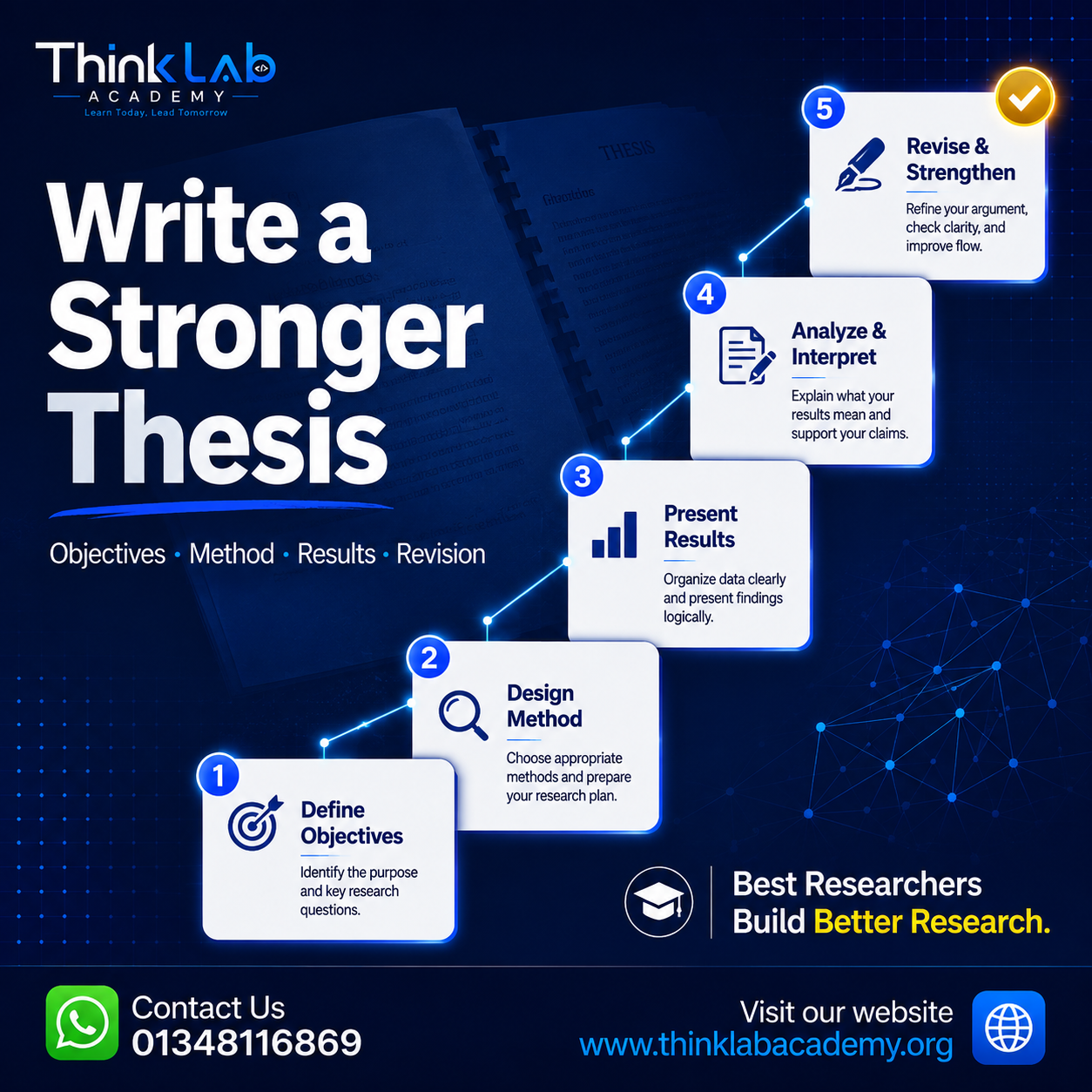
Almost every weak thesis fails in the same way. The individual chapters are competent, but they do not talk to each other: the objectives promise one thing, the methods measure another, and the conclusion claims more than the results can carry. Examiners find this quickly, because they read for consistency before they read for content. The five steps below follow the order in which a thesis is actually built, and each one protects the next.
One, define the objectives and treat them as a contract. Three or four specific objectives, each expressed with a measurable verb such as assess, compare or determine, will shape the whole document. Every literature theme, every variable in your questionnaire, every table in your results and every recommendation should trace back to one of them. If something cannot be traced, it either belongs in an appendix or does not belong at all.
Two, design the method so someone else could repeat it. State the study area and why it was chosen, the population and sampling frame, the sampling technique and how the sample size was calculated, the instrument and its validity and reliability checks, and the analytical tool used for each objective. Vague phrases like data were collected randomly invite the questions you least want in a viva. Precision here is the cheapest credibility you will ever buy.
Three, present the results so they can be read at a glance. Organise findings objective by objective rather than test by test. Number every table and figure, give each a self-explanatory caption, and report the statistic, degrees of freedom, exact p-value and an effect size together. Follow each table with one plain sentence describing what it shows. Keep interpretation out of this chapter entirely; the reader should be able to see your evidence before they meet your argument.
Four, analyse and interpret without overclaiming. The discussion is where you explain why the pattern appeared, compare your finding with earlier studies, and say plainly where you disagree with them and what might explain the difference. Distinguish association from causation, acknowledge the limitations that follow from your design and sample, and let the recommendations grow out of the evidence rather than from general opinion. A modest claim that is fully supported survives a viva; an ambitious one that is not will be dismantled.
Five, revise and strengthen in separate passes. Draft quickly and edit slowly. Do one pass for argument and structure, a second for evidence and citation accuracy, a third for language, and a final one purely for formatting and references. Keep one idea per paragraph, put the claim in the first sentence, and use the past tense for what you did and the present for what is generally true. Apply the university format guide early instead of reformatting three hundred pages the night before submission, and hand a clean copy to a peer outside your topic. If they can restate your findings after one reading, your examiner will be able to as well.
Comments (1)
R
Rahim Uddin · 1 month ago
Great article, very helpful!